The TP-Link USB WiFi 6 Adapter review centers on the Archer TX20U Plus, a dual-band USB adapter designed to add 802.11ax wireless connectivity to a desktop PC.
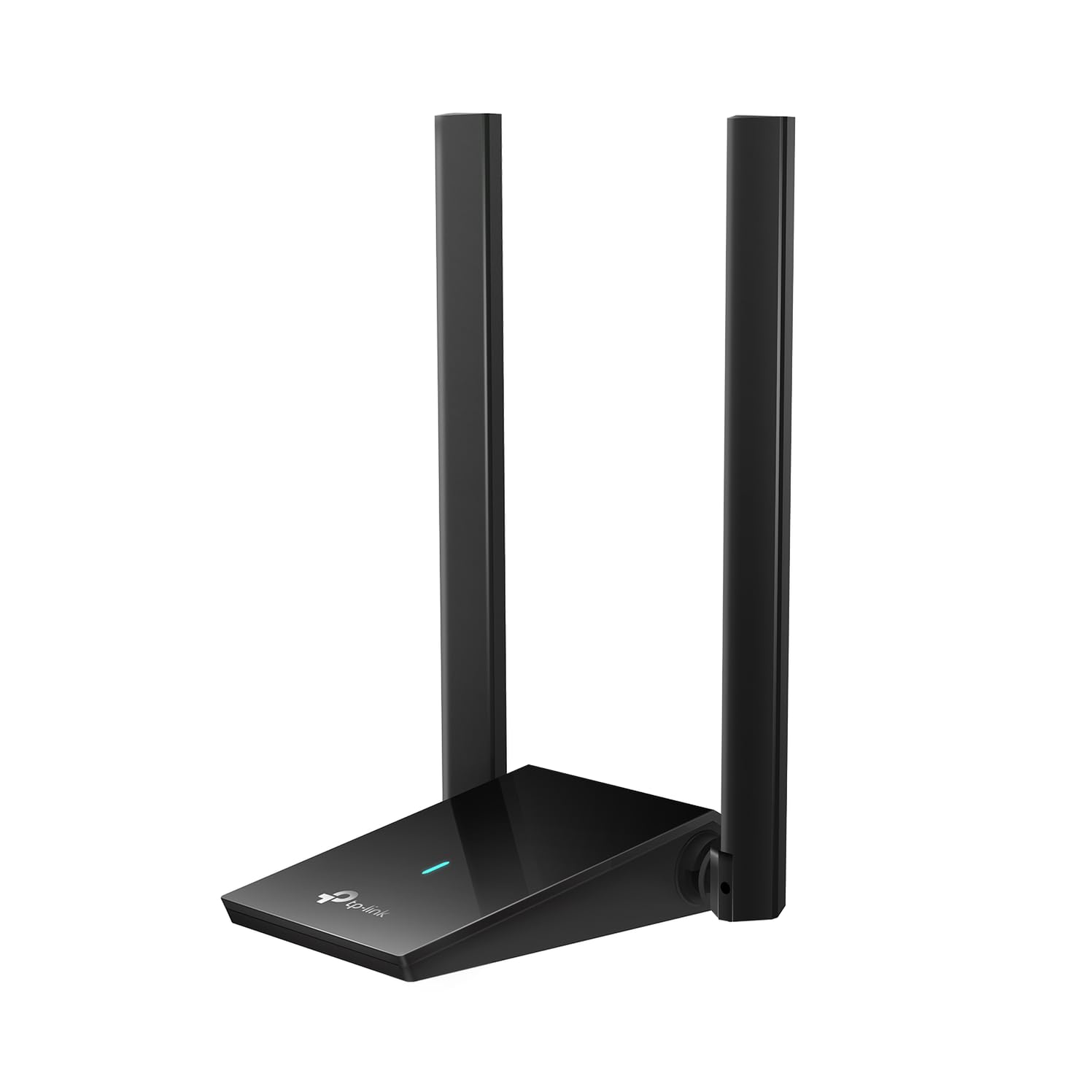
Its adjustable high-gain antennas and one-meter cable make placement a key part of the appeal.
Archer TX20U Plus Review Summary
The quick verdict
10,000+ ratings
Read Amazon ReviewsTP-Link Archer TX20U Plus
A fit for Windows desktop users who want dual-band WiFi 6, adjustable antennas, and flexible USB cable placement.
- WiFi 6 (802.11ax) connectivity in a USB adapter for desktop PCs.
- Dual-band operation, with maximum rates of up to 1201 Mbps on 5GHz and 574 Mbps on 2.4GHz.
- Two high-gain 5dBi antennas with adjustable, multidirectional positioning and beamforming support.
- MU-MIMO and OFDMA support, features intended to help manage communication in busy wireless environments.

Pros
- Adds WiFi 6 and two frequency bands through a USB connection.
- The adjustable antennas and cable make it easier to try different adapter positions.
Consider before buying
- The product recommends USB 3.0 for optimal performance, so buyers should confirm a suitable port is available.
- macOS setup requires manual driver installation, which may be less convenient than a plug-and-play workflow.
Read the full review summary
The Archer TX20U Plus combines WiFi 6, 2.4GHz and 5GHz connectivity, and a pair of adjustable 5dBi antennas.
The product lists theoretical maximum speeds of up to 1201 Mbps on 5GHz and 574 Mbps on 2.4GHz, for a combined AX1800 class rating. Those figures describe the adapter’s wireless link capabilities, not a guaranteed internet speed.
This design is most relevant to Windows 10 or 11 desktop owners who want to add wireless networking or replace an existing adapter.
The included one-meter USB 3.0 cable lets you position the adapter away from the PC’s USB port, which may help when the computer’s location or case makes reception placement awkward. macOS users should check the manual driver installation process before choosing it.
The buying factors
Archer TX20U Plus Scorecard
Editorial scores reflect listed features and buyer fit; they are not laboratory measurements or customer ratings.
Dual-band flexibility
Supports both 2.4GHz and 5GHz, with different maximum link rates for each band.
Wireless standard
WiFi 6 support brings 802.11ax connectivity to a compatible desktop, with MU-MIMO and OFDMA support.
Placement options
Adjustable multidirectional antennas and a one-meter USB 3.0 cable allow more placement flexibility than a directly connected adapter.
Security features
WPA3 support is included, though the network and other devices also need compatible security settings to use it.
Operating system fit
Windows 10 and 11 are the listed systems; macOS requires manual driver installation.
Setup considerations
The product recommends a USB 3.0 port for optimal performance and disabling the PC’s internal WiFi before installation.
Key Features and Specifications of Archer TX20U Plus
- WiFi 6 (802.11ax) connectivity in a USB adapter for desktop PCs.
- Dual-band operation, with maximum rates of up to 1201 Mbps on 5GHz and 574 Mbps on 2.4GHz.
- Two high-gain 5dBi antennas with adjustable, multidirectional positioning and beamforming support.
- MU-MIMO and OFDMA support, features intended to help manage communication in busy wireless environments.
- A one-meter USB 3.0 cable offers flexibility in where the adapter sits relative to the PC.
- WPA3 security support; Windows 10 and 11 are listed, while macOS requires manual driver installation.
Pros and Cons of Archer TX20U Plus
Pros
- Adds WiFi 6 and two frequency bands through a USB connection.
- The adjustable antennas and cable make it easier to try different adapter positions.
- WPA3, MU-MIMO, and OFDMA are useful modern connectivity features.
- The Windows 10 and 11 support is clearly identified, with 32-bit and 64-bit versions listed.
Consider before buying
- The product recommends USB 3.0 for optimal performance, so buyers should confirm a suitable port is available.
- macOS setup requires manual driver installation, which may be less convenient than a plug-and-play workflow.
- The stated band speeds are maximum wireless link rates; actual results depend on the network and environment.
Who Should Buy Archer TX20U Plus?
Good fit
Consider the Archer TX20U Plus if a Windows 10 or 11 desktop needs WiFi 6 connectivity and you value being able to adjust antenna direction or move the adapter using its cable.
It is particularly worth considering when a PC sits under a desk or against a wall, where experimenting with placement could be useful.
It also suits buyers whose router supports both bands and who want the option to connect over 2.4GHz or 5GHz.
A USB 3.0 port is recommended for optimal performance, so check the computer’s available ports and leave room for the adapter’s cable and antenna arrangement.
Before installation, follow the product guidance to disable the computer’s internal WiFi. If you plan to use macOS, first confirm that the manual driver process works for your operating system version and setup.
Who should skip it
Skip it if you need a wireless adapter with a simple, fully automatic macOS installation and do not want to handle manual driver setup.
Look elsewhere if you require guaranteed real-world speeds or your desktop has no suitable USB 3.0 port and peak adapter performance is a priority.
How the Archer TX20U Plus Fits a Desktop WiFi Upgrade
Dual-band rates and what they mean
The AX1800 designation combines maximum rates of up to 1201 Mbps on 5GHz and 574 Mbps on 2.4GHz.
These are wireless link figures, not promises of internet throughput: your router, broadband service, distance, interference, and connected devices all affect the experience.
The two-band design gives users a choice, with the best band depending on the network and room.
Antenna adjustment and cable placement
Two adjustable 5dBi antennas and a one-meter USB 3.0 cable give this adapter a placement-oriented design.
You can try positioning it where the antennas have a clearer path to the router, instead of being limited to the back of the computer.
Beamforming support is also listed, but the product details do not quantify the coverage or speed improvement a particular user should expect.
WiFi 6 features in a busy network
The adapter supports MU-MIMO and OFDMA, alongside WiFi 6. These technologies are designed to coordinate wireless communication and may be useful when compatible equipment shares a network.
Their practical benefit depends on the router and other devices, so they are reasons to consider the feature set rather than guarantees that congestion will disappear.
Installation and security checks
Windows 10 and Windows 11 are the listed operating systems, with both 32-bit and 64-bit support. macOS requires manual driver installation, so that extra step deserves attention before purchase.
WPA3 support can be useful for a compatible network, while the USB 3.0 recommendation and instruction to disable internal WiFi are important setup details for Windows desktop users.
Alternatives to Archer TX20U Plus
No alternative model is recommended here. Compare the design and features that matter to your routine before choosing another option.
Is Archer TX20U Plus Worth It?
The TP-Link Archer TX20U Plus is worth considering as a desktop WiFi 6 adapter for Windows 10 or 11 users who want dual-band support, adjustable antennas, and flexible placement through a one-meter USB cable.
Its feature set covers the main points many desktop buyers will weigh: wireless standard, band choice, antenna positioning, and WPA3 support.
Check for a USB 3.0 port before buying, and account for manual driver installation if you use macOS.
Treat the listed speeds as maximum link rates rather than expected internet results; with those expectations, this is a practical option for adding wireless connectivity to a compatible desktop.
Your review at a glance
10,000+ ratings
Read Amazon ReviewsTP-Link Archer TX20U Plus
A fit for Windows desktop users who want dual-band WiFi 6, adjustable antennas, and flexible USB cable placement.
- WiFi 6 (802.11ax) connectivity in a USB adapter for desktop PCs.
- Dual-band operation, with maximum rates of up to 1201 Mbps on 5GHz and 574 Mbps on 2.4GHz.
- Two high-gain 5dBi antennas with adjustable, multidirectional positioning and beamforming support.
- MU-MIMO and OFDMA support, features intended to help manage communication in busy wireless environments.