This Silkland 54Gbps 16K DisplayPort Cable 2.1 review looks at a 10-foot male-to-male cable aimed at high-resolution monitor and gaming setups.
Its listed display modes are ambitious, so the best fit depends on what both your graphics card and monitor support.
Silkland DisplayPort Cable Review Summary
The quick verdict
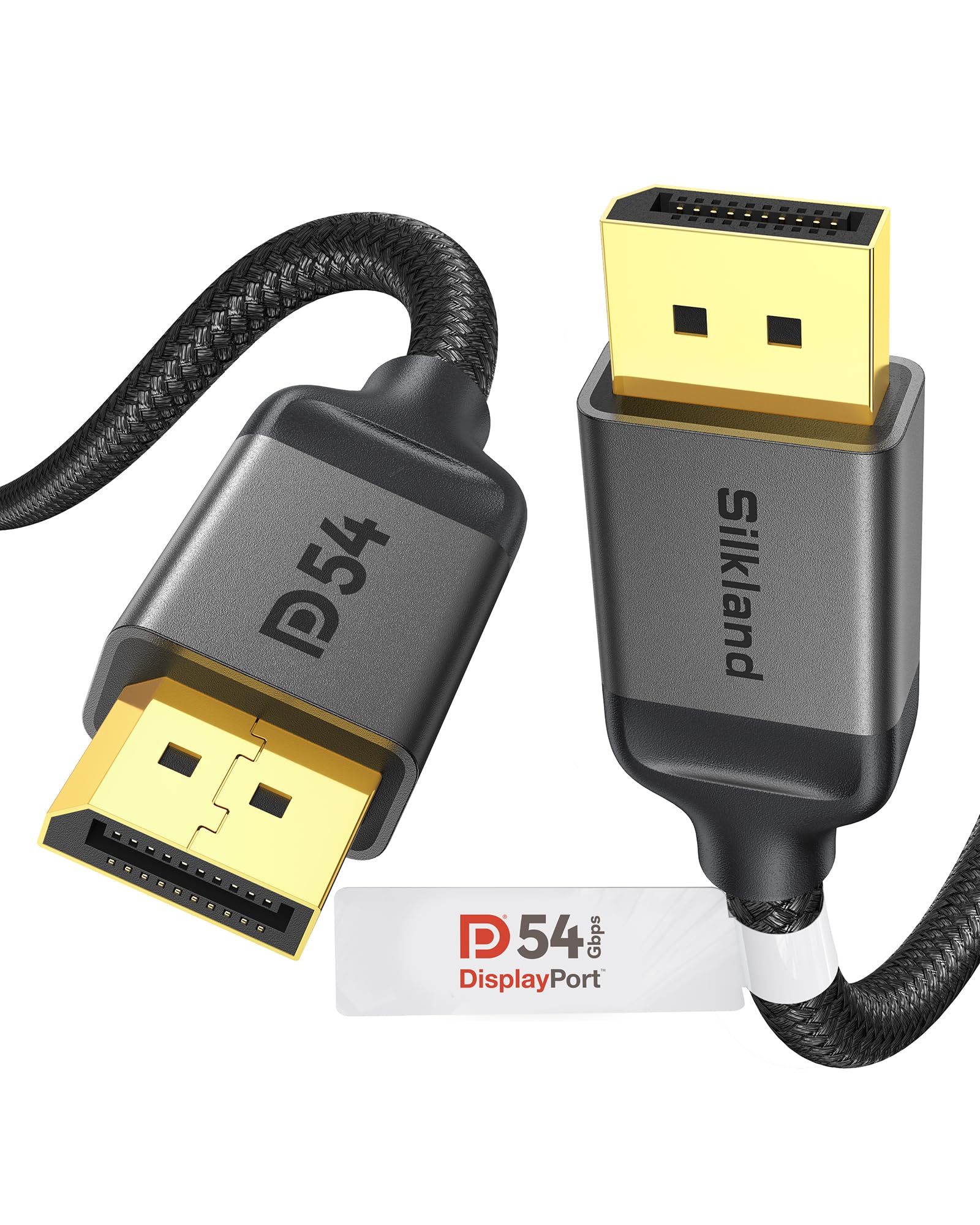
7,000+ ratings
Read Amazon ReviewsSilkland 54Gbps DisplayPort Cable
A 10-foot DisplayPort cable for PC gamers and monitor users seeking high refresh rates, broad backward compatibility, and a braided build.
- 10-foot DisplayPort-to-DisplayPort male-to-male cable.
- Listed bandwidth of 54Gbps, with support for HBR3 and DSC 1.2a.
- Supports up to 16K at 60Hz with DSC, 8K at 120Hz, and 4K at up to 240Hz; supported modes depend on the connected equipment.
- Supports Dynamic HDR, HDCP 2.2, 3D stereo imaging, and multi-stream transmission.

Pros
- Offers several high-resolution and high-refresh-rate modes, including a 16K mode when DSC is used.
- Its 10-foot length gives more routing room than a short desk-only cable.
Consider before buying
- The headline display modes require compatible source hardware, monitor, and settings; the cable cannot enable modes that the rest of the setup does not support.
- At 10 feet, it may leave excess cable in a compact desk setup where the PC sits beside the monitor.
Read the full review summary
The Silkland cable combines a claimed 54Gbps bandwidth with support for modes including 8K at 120Hz, 4K at up to 240Hz, and 16K at 60Hz with DSC.
It also supports Dynamic HDR, HDCP 2.2, DSC 1.2a, multi-stream transmission, and uncompressed multichannel audio pass-through. A 10-foot run offers some flexibility when a PC and monitor are not close together.
Its braided exterior, tinned copper conductors, triple shielding, and latch-free connector design are practical details for a frequently handled desktop cable. The broad backward compatibility also makes it suitable for mixed-generation DisplayPort equipment.
Buyers should check the capabilities of both connected devices and the settings they need before expecting any particular resolution and refresh-rate combination.
The buying factors
Silkland DisplayPort Cable Scorecard
Editorial scores reflect listed features and buyer fit; they are not laboratory measurements or customer ratings.
Listed display modes
The range includes high refresh rates at 4K and 8K, plus a 16K mode with DSC, giving high-end setups several potential options.
Bandwidth headroom
The 54Gbps rating is aimed at demanding displays, though a cable alone cannot determine the modes a system can use.
Compatibility range
Backward compatibility across several DisplayPort generations helps it work with older equipment as well as newer setups.
Cable construction
Triple shielding, tinned copper, and a double nylon braid are useful design choices for a long desktop cable run.
Connector convenience
The latch-free plug and groove are intended to make removal easier, especially where connector access is tight.
Length flexibility
Ten feet can simplify routing between a desktop PC and a monitor when a shorter cable would be restrictive.
Key Features and Specifications of Silkland DisplayPort Cable
- 10-foot DisplayPort-to-DisplayPort male-to-male cable.
- Listed bandwidth of 54Gbps, with support for HBR3 and DSC 1.2a.
- Supports up to 16K at 60Hz with DSC, 8K at 120Hz, and 4K at up to 240Hz; supported modes depend on the connected equipment.
- Supports Dynamic HDR, HDCP 2.2, 3D stereo imaging, and multi-stream transmission.
- Pass-through support for uncompressed 7.1, 5.1, and 2.0 digital audio channels.
- 28AWG tinned copper conductors, triple shielding, double nylon braid, and 24K gold-plated connectors.
- Backward compatible with DisplayPort 2.0, 1.4, 1.3, 1.2, 1.2a, 1.1, and 1.0; the plug has no latch and includes a groove for gripping.
Pros and Cons of Silkland DisplayPort Cable
Pros
- Offers several high-resolution and high-refresh-rate modes, including a 16K mode when DSC is used.
- Its 10-foot length gives more routing room than a short desk-only cable.
- Braiding, triple shielding, and tinned copper address durability and interference considerations in the cable's design.
- Backward compatibility gives it a wider potential range of DisplayPort setups.
- Latch-free plugs with a grip groove may be easier to unplug in cramped spaces.
Consider before buying
- The headline display modes require compatible source hardware, monitor, and settings; the cable cannot enable modes that the rest of the setup does not support.
- At 10 feet, it may leave excess cable in a compact desk setup where the PC sits beside the monitor.
- The 16K-at-60Hz mode specifically uses DSC, so buyers seeking uncompressed output should confirm the target mode and system requirements before choosing.
Who Should Buy Silkland DisplayPort Cable?
Good fit
Consider it if you need a longer DisplayPort connection for a gaming PC or workstation and want a cable designed for high-resolution, high-refresh-rate displays.
The 10-foot length can help route around a desk or mount, while backward compatibility makes it a plausible option for a setup that includes older DisplayPort equipment.
It is also worth considering if you value a braided exterior and a connector without a locking latch.
Before buying, compare the exact resolution and refresh rate you plan to use against the capabilities of both your graphics card and monitor, and check whether the mode relies on DSC.
Who should skip it
Choose a shorter cable if your computer and monitor sit close together and you want to avoid managing extra slack.
If your target display mode depends on specific device support or DSC, confirm those details for your system before treating the cable's listed maximums as a match.
How the Silkland DisplayPort Cable Fits a High-Refresh Setup
Match the cable to the complete display chain
A cable's bandwidth and supported modes matter only alongside the graphics card and monitor. The Silkland cable lists 4K at up to 240Hz, 8K at 120Hz, and 16K at 60Hz with DSC, but those are setup-dependent options.
Check the output capabilities of the source and the input and settings of the display for the specific mode you plan to use.
Consider what DSC means for the target mode
Display Stream Compression is part of the stated 16K-at-60Hz support, and DSC 1.2a is among the cable's supported features.
If you have a particular resolution and refresh rate in mind, confirm whether your devices support the required connection mode and compression. That check is more useful than relying on the largest resolution figure by itself.
Use the length and build for your desk layout
A 10-foot cable can offer more freedom to route behind furniture or between a tower and a monitor positioned farther away.
Its double nylon braid, tinned copper conductors, and triple shielding are design features intended for a durable, shielded cable. A compact setup may call for a shorter run, while a longer route may make the extra reach useful.
Factor connector access into installation
The connector has no latch and uses a groove to make it easier to grip when unplugging, including in a small space.
That can be convenient if a monitor's ports are difficult to reach, while the male-to-male DisplayPort ends are suited to direct connections between DisplayPort-enabled computers and monitors.
Check the port locations and cable path before setting up the run.
Alternatives to Silkland DisplayPort Cable
Computer DisplayPort Cables alternative
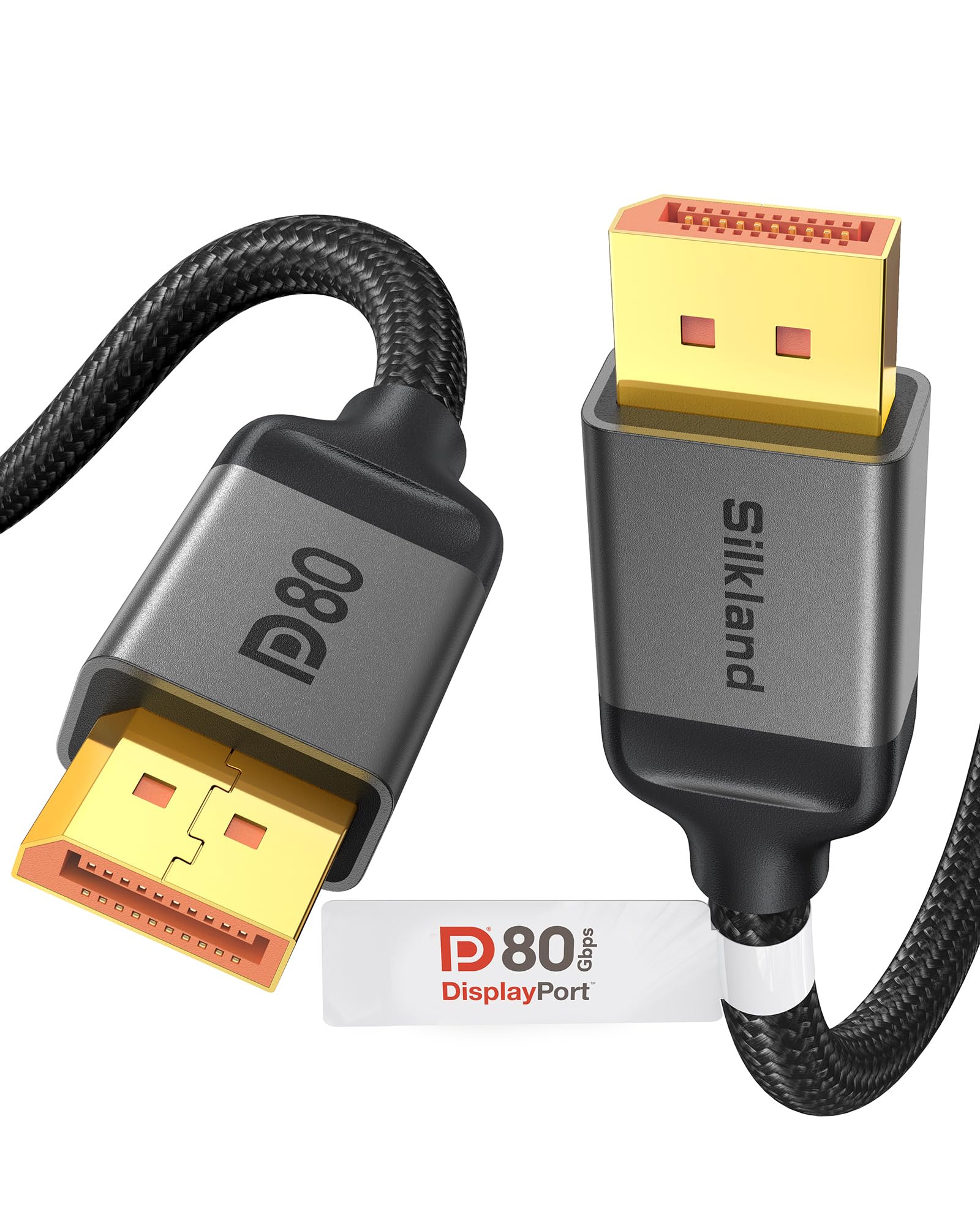
2,000+ ratings
Read Amazon ReviewsSilkland 80Gbps Short DisplayPort 2.1 Cable
Choose the 10-foot 54Gbps option when reach and routing flexibility matter.
The 1.6-foot DP80 alternative is a better fit for a short connection where its higher listed bandwidth and DP80 modes align with the graphics card and display; check device support before choosing based on those modes.
- This 1.6-foot DP80 cable lists 80Gbps bandwidth, uncompressed 4K at 240Hz and 8K at 60Hz, plus up to 16K at 60Hz and higher refresh rates with DSC.
- Its description also calls out UHBR20 and VESA certification.
- The Silkland 54Gbps cable is 10 feet long and lists modes including 4K at up to 240Hz and 8K at 120Hz, with 16K at 60Hz using DSC.
Is Silkland DisplayPort Cable Worth It?
The Silkland 54Gbps DisplayPort Cable is worth considering for a PC-to-monitor setup that needs a 10-foot run, broad backward compatibility, and support for high-refresh-rate display modes.
Its braided build and latch-free connector add practical appeal for a cable that may need to be routed or unplugged regularly.
Buy it if the length suits your layout and your graphics card and monitor support the mode you intend to use, including DSC where required.
For a short run or a setup targeting DP80 modes, compare the relevant cable length and device support before deciding.
Your review at a glance
7,000+ ratings
Read Amazon ReviewsSilkland 54Gbps DisplayPort Cable
A 10-foot DisplayPort cable for PC gamers and monitor users seeking high refresh rates, broad backward compatibility, and a braided build.
- 10-foot DisplayPort-to-DisplayPort male-to-male cable.
- Listed bandwidth of 54Gbps, with support for HBR3 and DSC 1.2a.
- Supports up to 16K at 60Hz with DSC, 8K at 120Hz, and 4K at up to 240Hz; supported modes depend on the connected equipment.
- Supports Dynamic HDR, HDCP 2.2, 3D stereo imaging, and multi-stream transmission.